Wang Guofeng
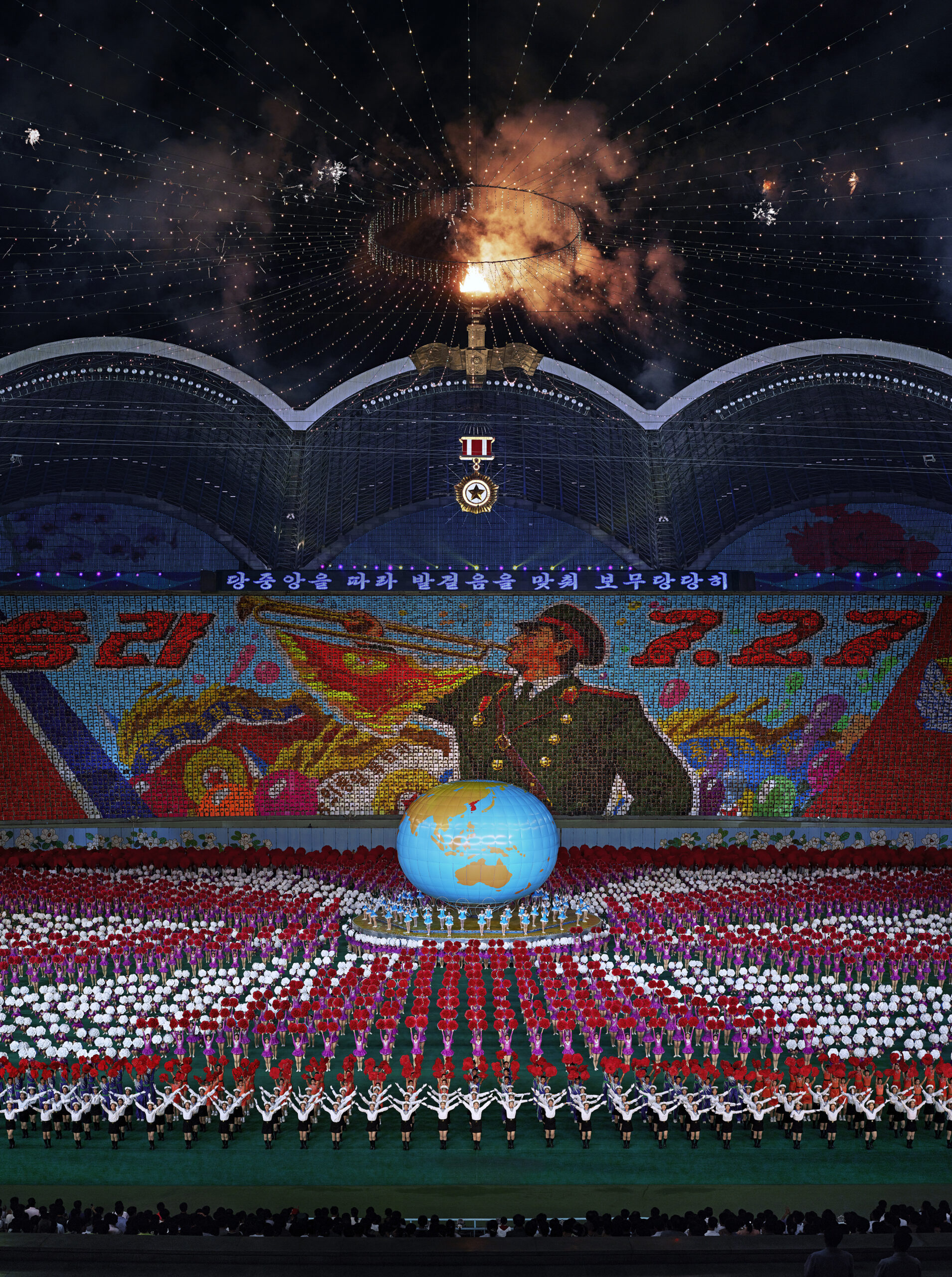
North Korea 2013 No.2, 2013, C-print, 247 x 186 cm
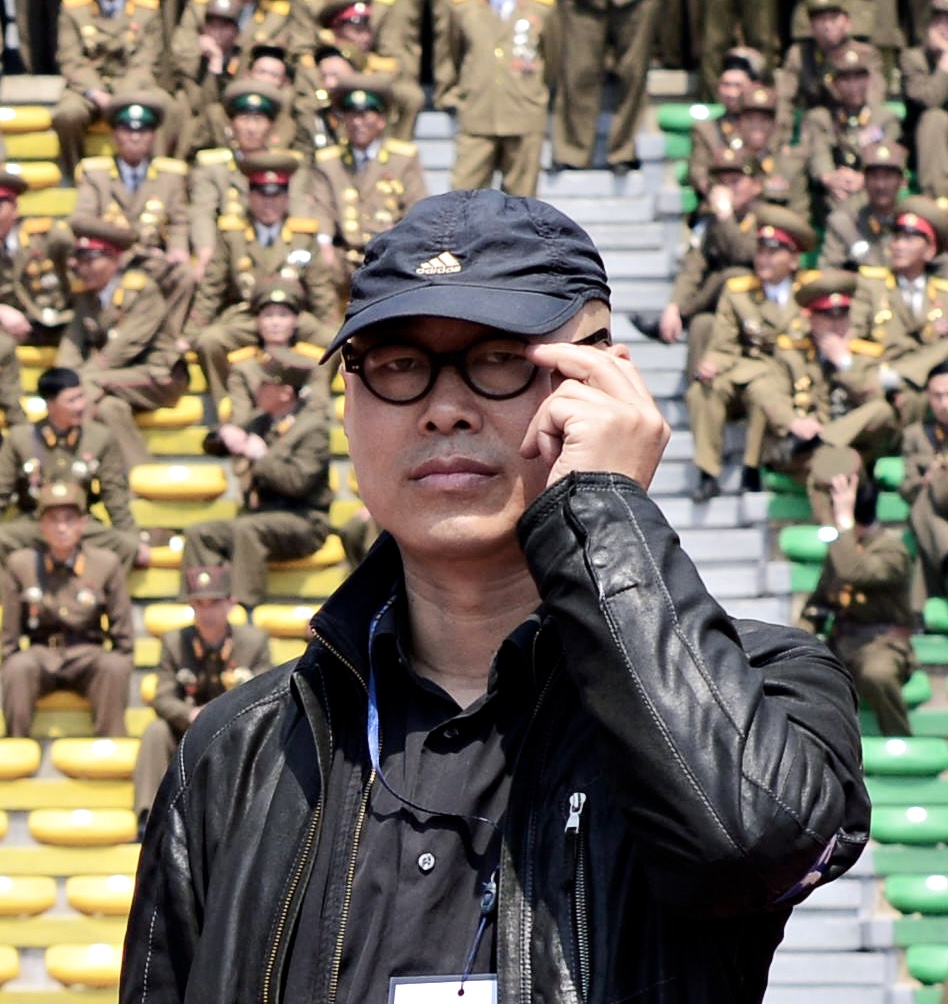
Wang Guofeng
Wang Guofeng is a contemporary visual artist. In 2019, he was selected as one of the Top 15 Contemporary Photographers in Asia by the International Photography Awards (IPA). In 2014, he received the AAC Art China Award for “Photographer of the Year” and an Honorable Mention at the Moscow International Foto Awards (MIFA). In 2007, he was nominated for the ING Group REAL International Contemporary Photography Award in the Netherlands. Wang Guofeng was born in 1967 in Liaoning, China. From 1996 to 1998, he studied in the Department of Chinese Painting and the Fine Arts Department at the Central Academy of Fine Arts. He currently lives and works in Beijing.
Wang Guofeng works across a wide range of media, including photography, video, painting, and installation. Since 2005, he has used photography as his primary medium to create multiple series of large-scale panoramic color conceptual works, sharply and profoundly revealing the far-reaching impact of the twentieth-century communist movement and its ideology on human social life. Representative works on this theme include the Ideal series, the Utopia series, and the North Korea series. Since 2011, at the special invitation of the North Korean central government, Wang has spent five consecutive years working in North Korea. During this time, he photographed iconic political architecture, major political gatherings, as well as portraits of workers, farmers, doctors, students, families, and model laborers from various professions, producing multiple series of photographic and video works. Through monumental panoramic imagery, he integrates thematic structure with the legibility of detail, combining the documentary nature of photography with painterly language to offer a multidimensional interpretation of the distinctive landscape of North Korean social life.
In his photographic practice, in order to achieve an in-depth representation of visual detail, Wang first conducts close-range, fragmentary shooting to collect a large amount of image material. He then edits, collages, and composites these image fragments digitally to complete the final works. Through this method, he creates extremely large-scale pieces that generate a strong sense of presence, enabling viewers to engage with details and perceive the spiritual and political dimensions embedded within the image and its materiality.
Since 2009, Wang has further expanded his visual language and conceptual framework. He increasingly employs strategies such as appropriation and re-encoding to deconstruct and reconstruct images, attempting to build a new visual vocabulary. Representative series include News, Relative, Memory, Pixel, Untitled, and Link. In 2015, his image installation Probe, presented at the Beijing space of de Sarthe Gallery, further advanced and extended these ideas. Breaking away from his previous modes and experiences, he combined image and space, transforming flat images into spatial installations. He relocated photographs of outdoor scenery taken with a mobile phone at the gallery window into the interior space, enlarging them to the extreme so that they filled the entire 600-square-meter structure. Through this displacement and transformation, the most fundamental element of the image—the “pixel”—is fully revealed, leading to a subversive reconstruction that dissolves the original narrative meaning. Viewers are immersed in a purely abstract visual field composed of pixels. Through this “game” of image transformation, he further explores the paradox between the meanings we assign to everyday images and the ways in which we perceive them.
In Wang’s more recent Link series, we can observe the continuation of his longstanding line of inquiry and his internationalist perspective. He remains attentive to contemporary reality and the nature of images. By collecting a large number of news images related to international events from the internet, he edits and composites these fragmented, non-linear images into a subjective “theater of the world.” Conceptually, he uses images as a medium and the internet as a connective framework, reconstructing images to establish links between images and images, images and events, images and media, and images and thought.
Looking across Wang Guofeng’s entire body of work, it is evident that his reflection on the image has continuously evolved within a coherent logical system. Through his practice, he persistently engages in a deep inquiry into the relationships between image and reality, history, time, and memory.
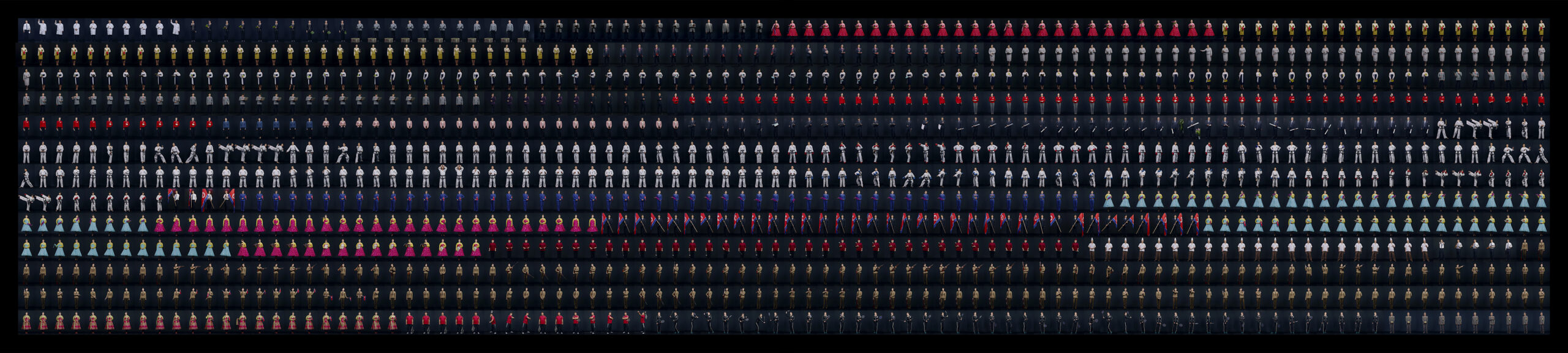
Ordering the Body 2015 No.2
224 x 166 cm each

North Korea 2014 – Children’s Palace-No.1
224 x 166 cm each

North Korea 2014 – High school students at physics class
180 x 281 cm

North Korea 2014 – English Class at Pyongyang International Football School
180 x 271 cm