Past
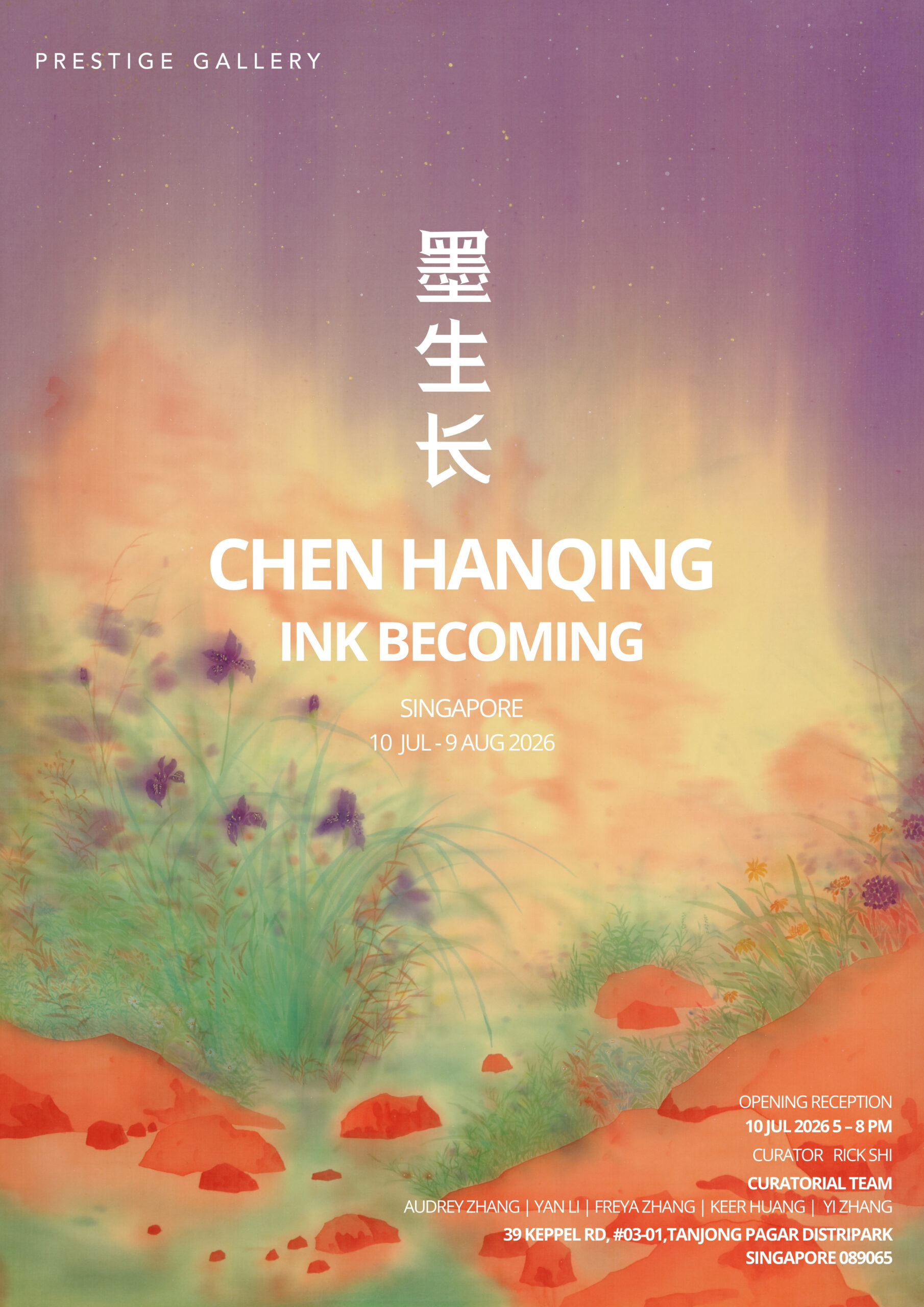
Ink Becoming
Chen Hanqing Solo Exhibition
10 July – 09 Aug 2026
Tue – Sun: 11am – 7pm
Exhibition
10 July – 09 Aug 2026
Curator:Rick Shi
Curatorial Team:Audrey Zhang, Yan Li, Freya Zhang, Keer Huang, Yi Zhang
Prestige Gallery:
39 Keppel Rd, Lobby A #03-01
Tanjong Pagar Distripark, Singapore 089065
Opening Reception
10 July 2026 (Friday)5:00 – 8:00 pm
Artist Talk
11 July 2026 (Saturday) 3:00 – 5:00 pm
Academic Talk
Speaker: Hong Zhao
18 July 2026 (Saturday) 3:00 – 5:00 pm
Media Release Download Here
“Ink” stands as one of Asia’s most representative visual languages, demonstrating a brand-new generative power within contemporary cross-cultural contexts. Prestige Gallery is deeply honoured to present young artist Chen Hanqing’s inaugural international solo exhibition, Ink Becoming, in Singapore. Servicing as a significant academic presentation of the Gallery’s dedicated research into the ink sector, this exhibition offers a concentrated survey of the artist’s pivotal creative achievements from recent years, encompassing multiple mediums including ink and colour on paper, ink and colour on silk, and Dehua white porcelain sculptures.
The exhibition is structured around the core concept of “becoming”, which points not only to the diachronic evolution of traditional ink vernaculars, but also symbolises the creative transformation of contemporary individuals amidst cultural inheritance and global practices. Chen Hanqing’s practice does not stop at a gentle reconciliation of classical symbols; rather, he sustains a highly tense dialogue between the rational spirit of literati painting and the critical consciousness of contemporary ink art. This trajectory spans from “Seeking the Realm of the Formless”, with its philosophical exploration of illusion and reality, to the “Sentiments Among Flowers” and “Song of the Great Wind” series, which blend the Song Dynasty xieyi (freehand) spirit and the vast aura of Han Yuefu poems with modern Western visual experiences. It further extends from the “Hidden Mountain” series, which offers an academic translation of contemporary urban landscapes, to the “Like a Dream” Dehua white porcelain series—a joint creation with his father Chen Rongchun that marks a contemporary breakthrough in classical poetic imagery. Chen’s works allow landscapes, flowers, birds, and auspicious creatures to transcend mere natural representation, transforming them into contemporary visual vehicles that carry states of life and cultural memory.
Curator Rick Shi notes that Chen’s artistic practice forms a subtle yet profound cross-regional academic intertextuality with the innovative paths of early 20th-century Vietnamese modern art pioneers, such as Lê Phổ and Mai Trung Thứ. These avant-gardes of Asian modernism once sought a modernist outlet for Eastern painting through a freer use of colour and open spatial structures. Similarly, Chen’s works exhibit characteristics that are both gentle and restrained yet expressive and luminous, allowing classical sensibilities and contemporary aesthetics to resonate dynamically on the international stage.
Prestige Gallery remains committed to forging multiple paths for international dialogue within contemporary ink art, navigating the space between continuity and transformation. Through Chen Hanqing’s visual construction, we hope to present the active response of a new generation of artists to the future possibilities of the ink medium, whilst driving deep exchanges of Asian contemporary visual culture within a global context.
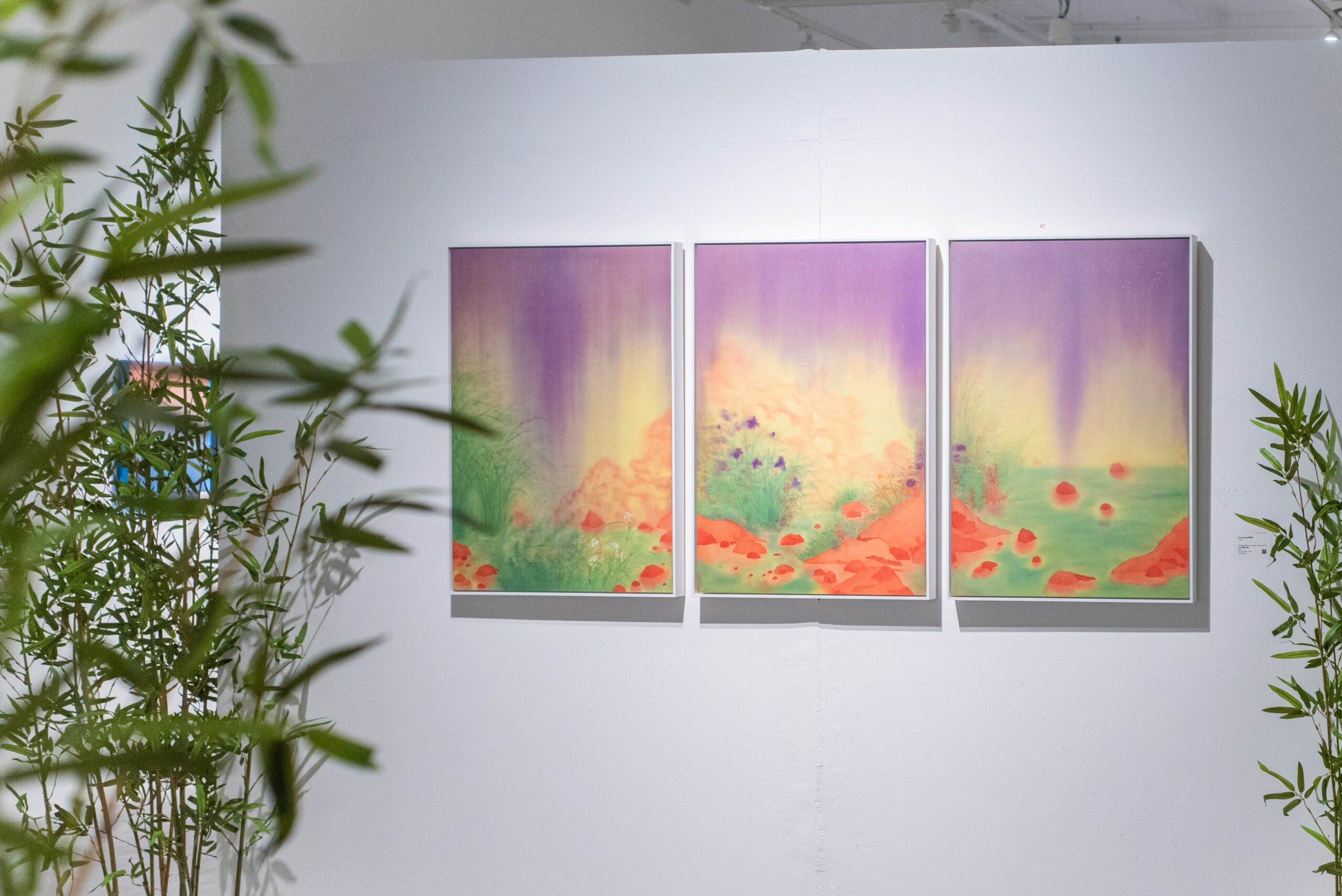
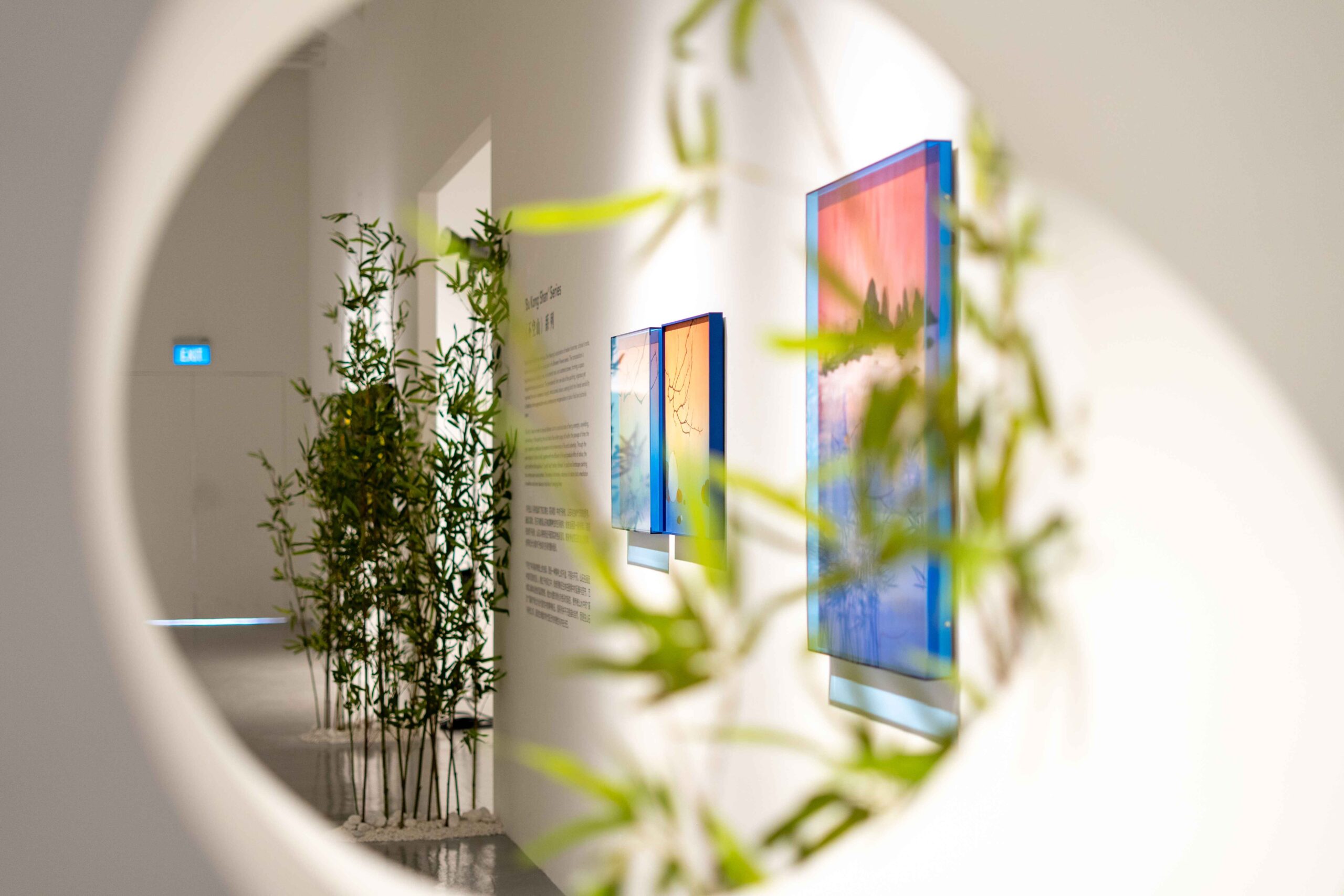
Installation View of the Exhibition Space
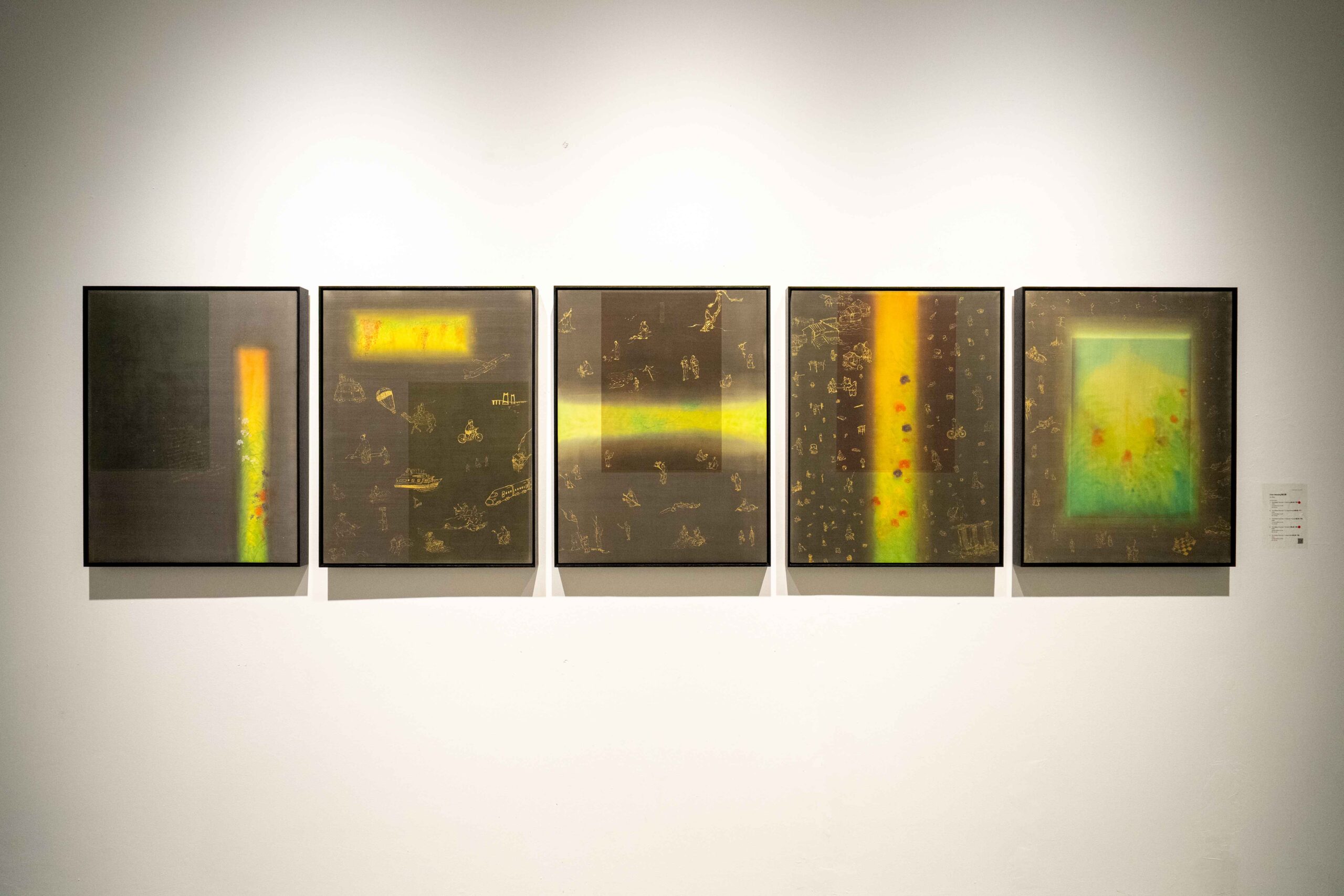
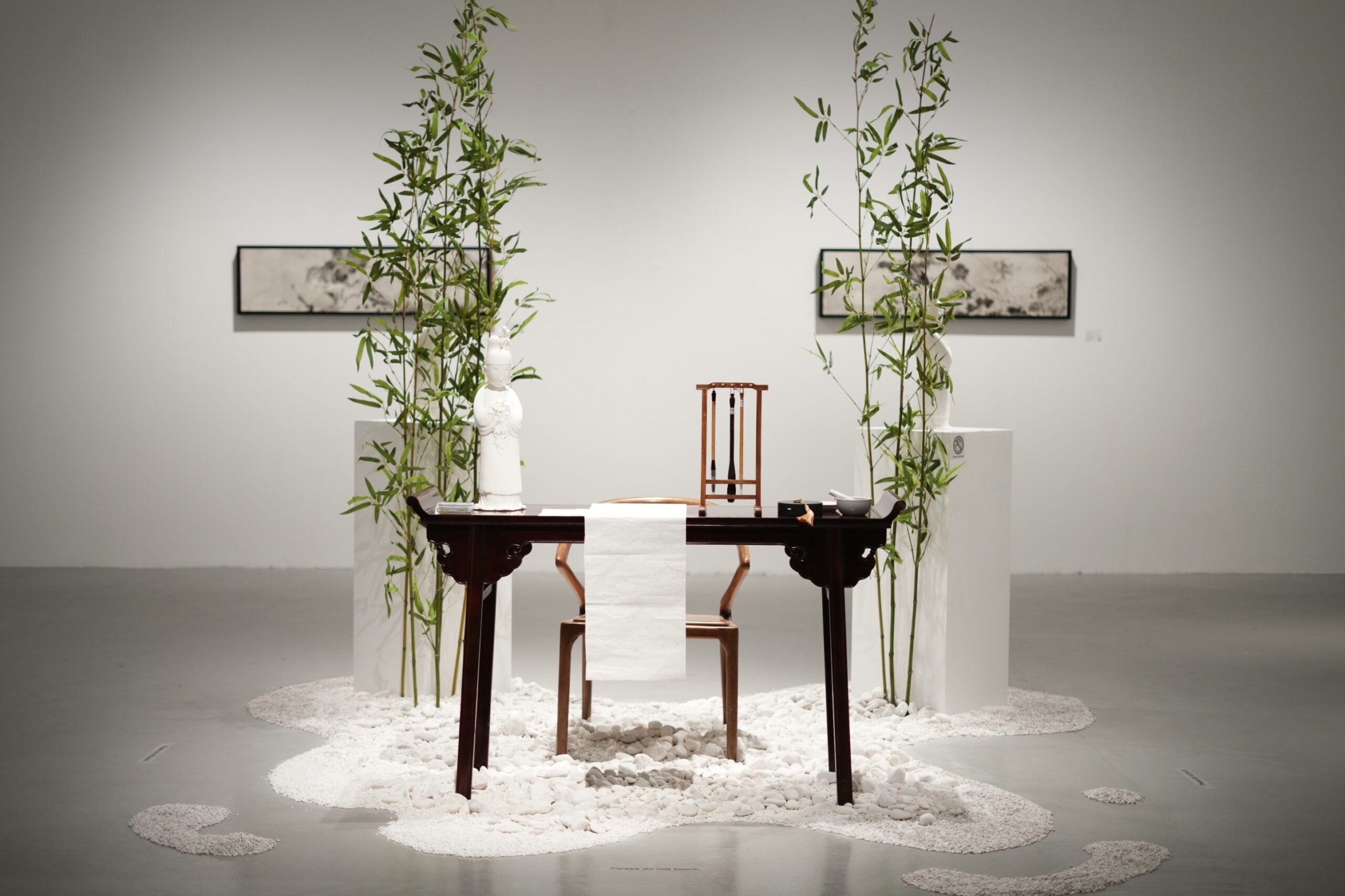
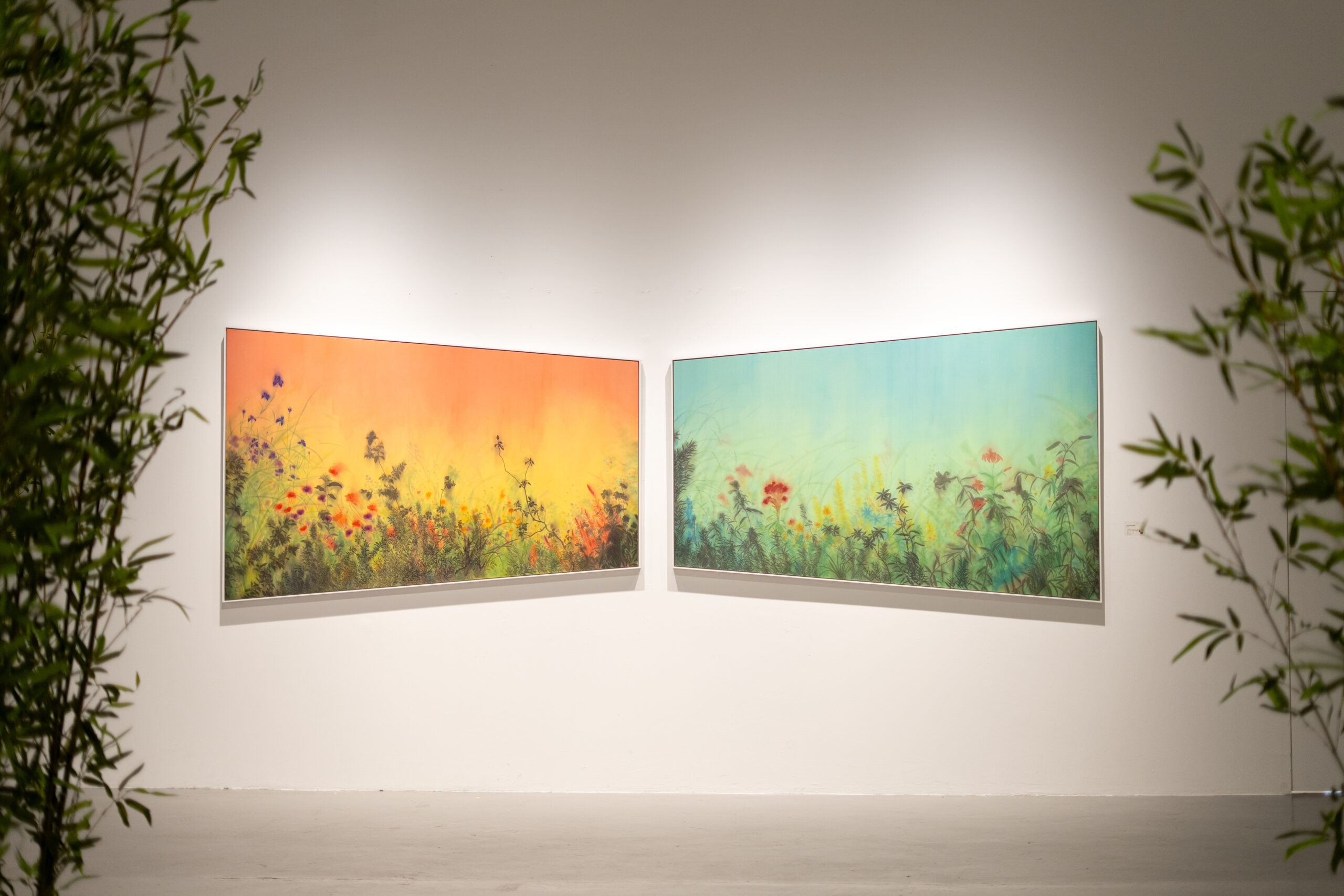
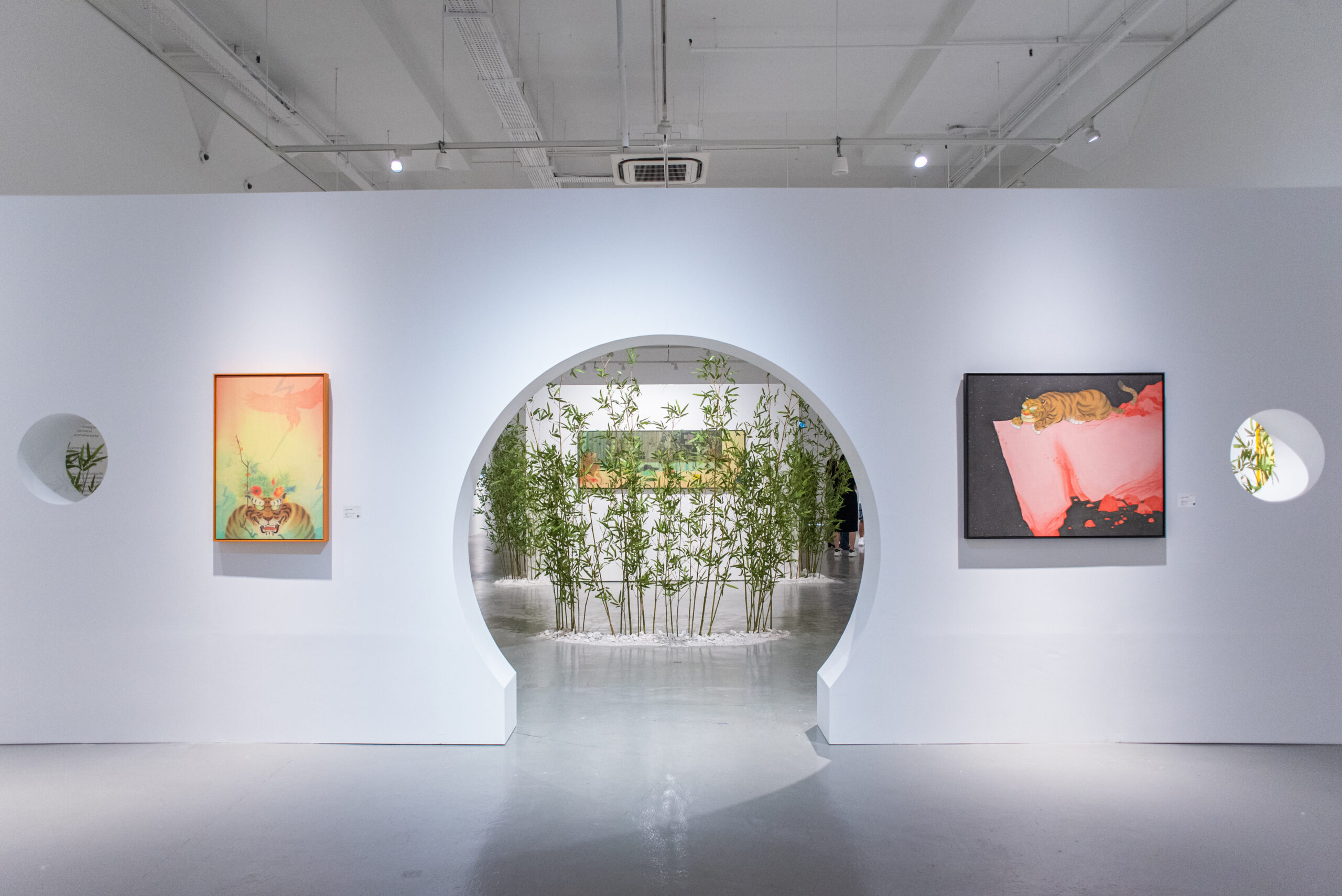
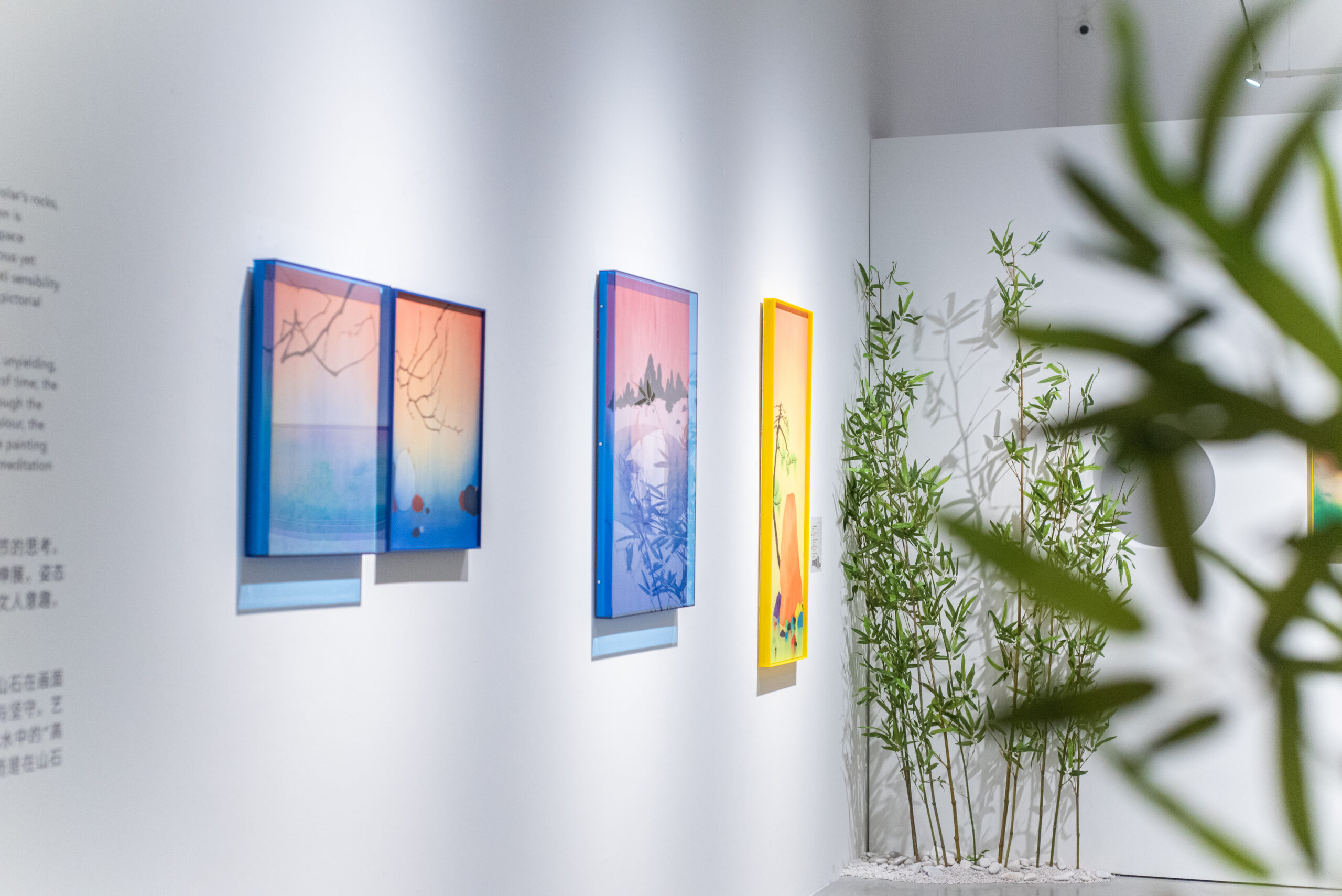
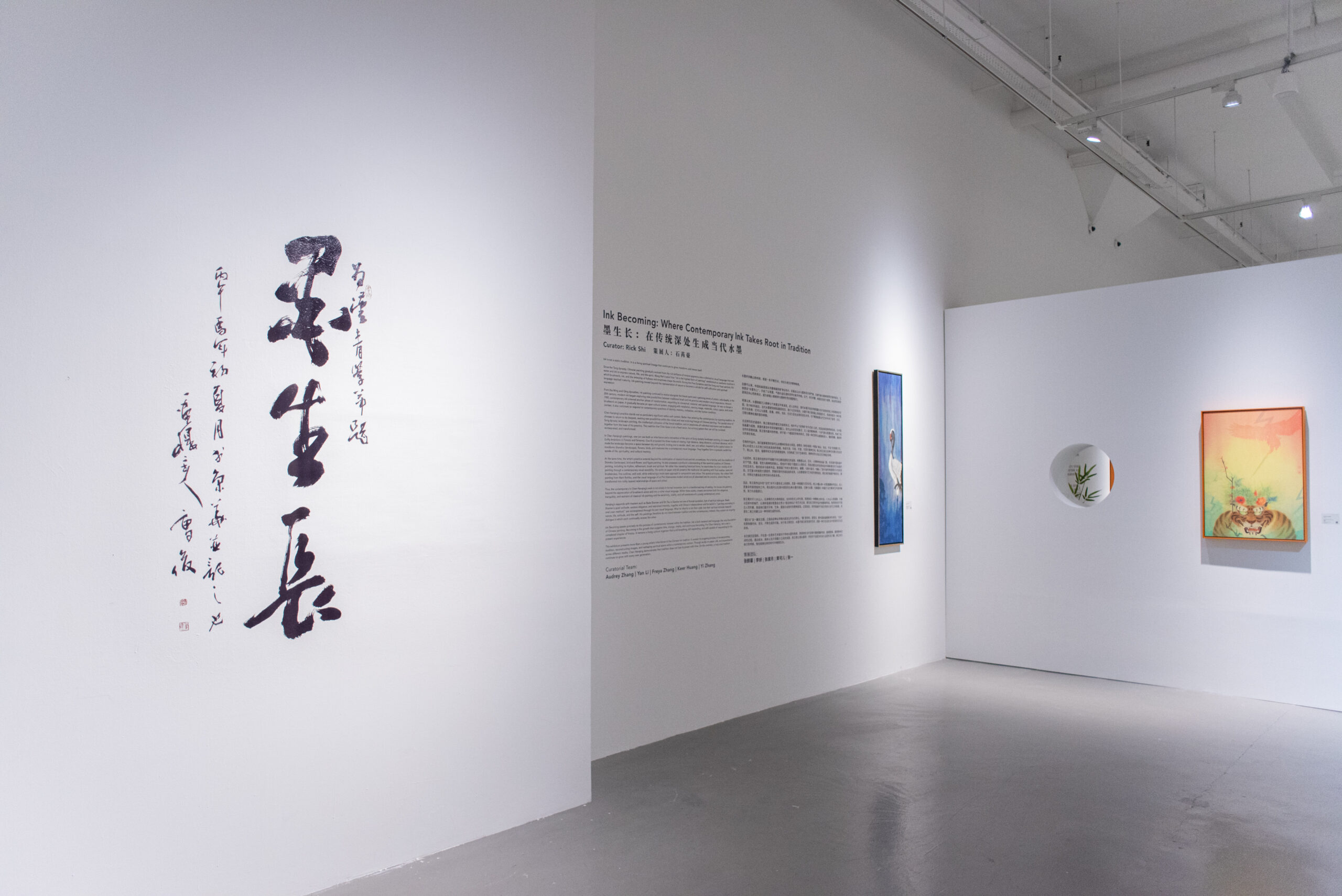
Selected Works
Debut & Graduation Masterpiece「Seeking the Realm of the Formless」
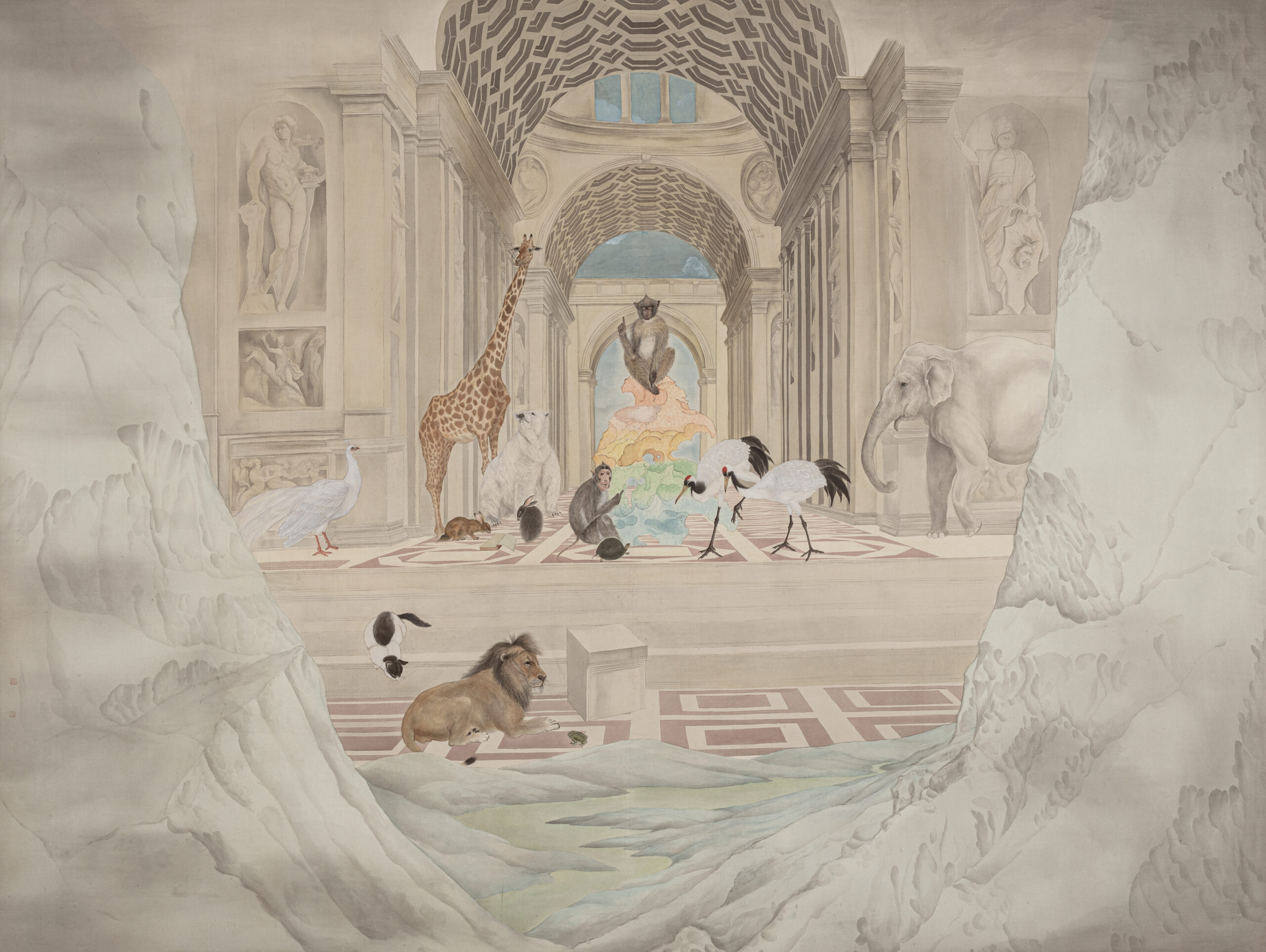
Seeking the Realm of the Formless, 2020, Ink and colour on silk, 240 × 180 cm
Born of a reflection on the spiritual disorientation of contemporary life, the work draws upon the philosophical thought of “Xiàng Wǎng retrieving the pearl” from Zhuangzi to investigate the spatial consciousness of East and West. It fuses elements from Dong Yuan’s Riverbank and Raphael’s School of Athens, employing the bird’s-eye perspective characteristic of Ming-Qing illustrations and the vignetting technique of Hiroshi Sugimoto to seek the authentic truth of the spirit within the interplay of the real and the illusory.
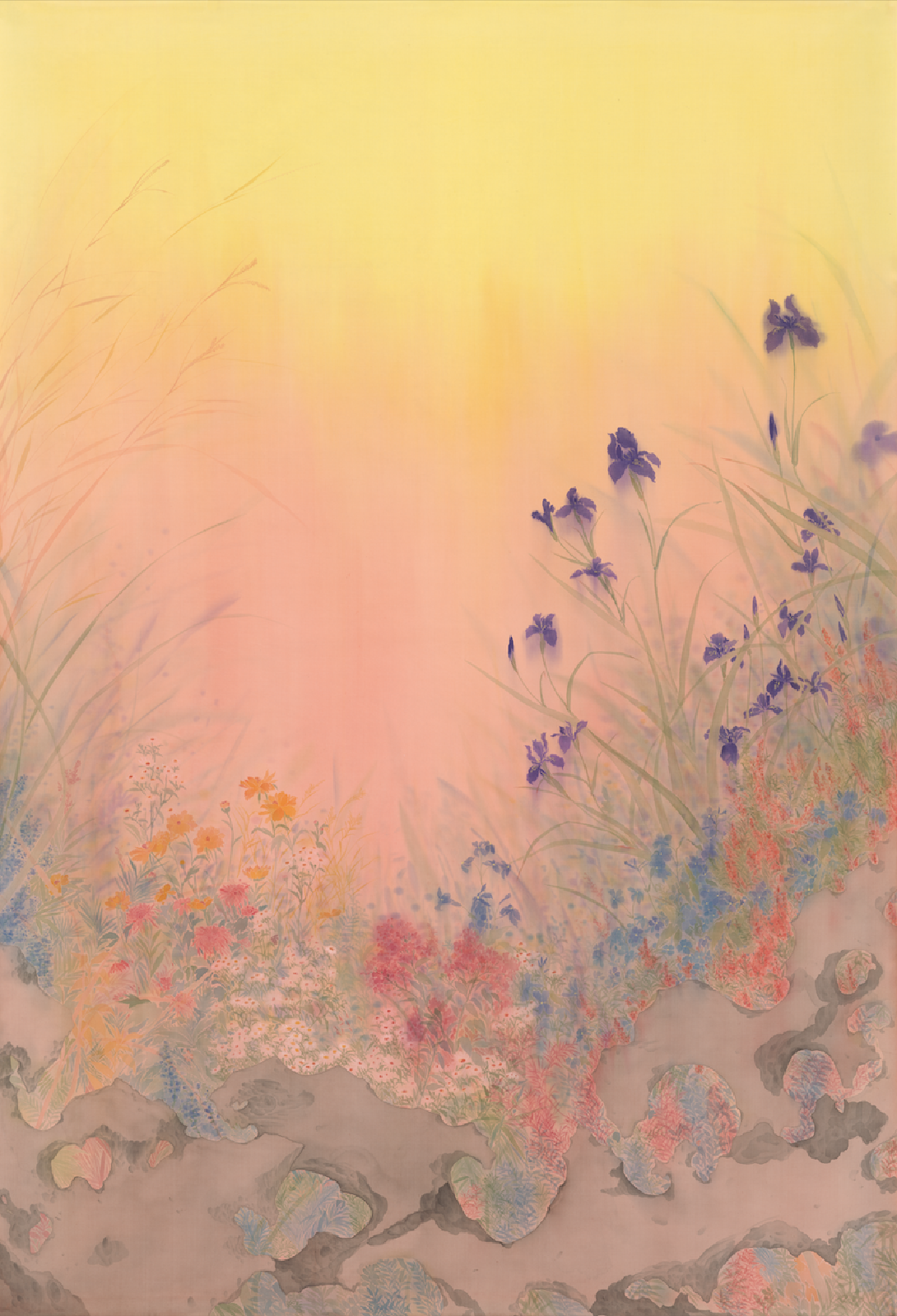
“Sentiments Among the Flowers” Series
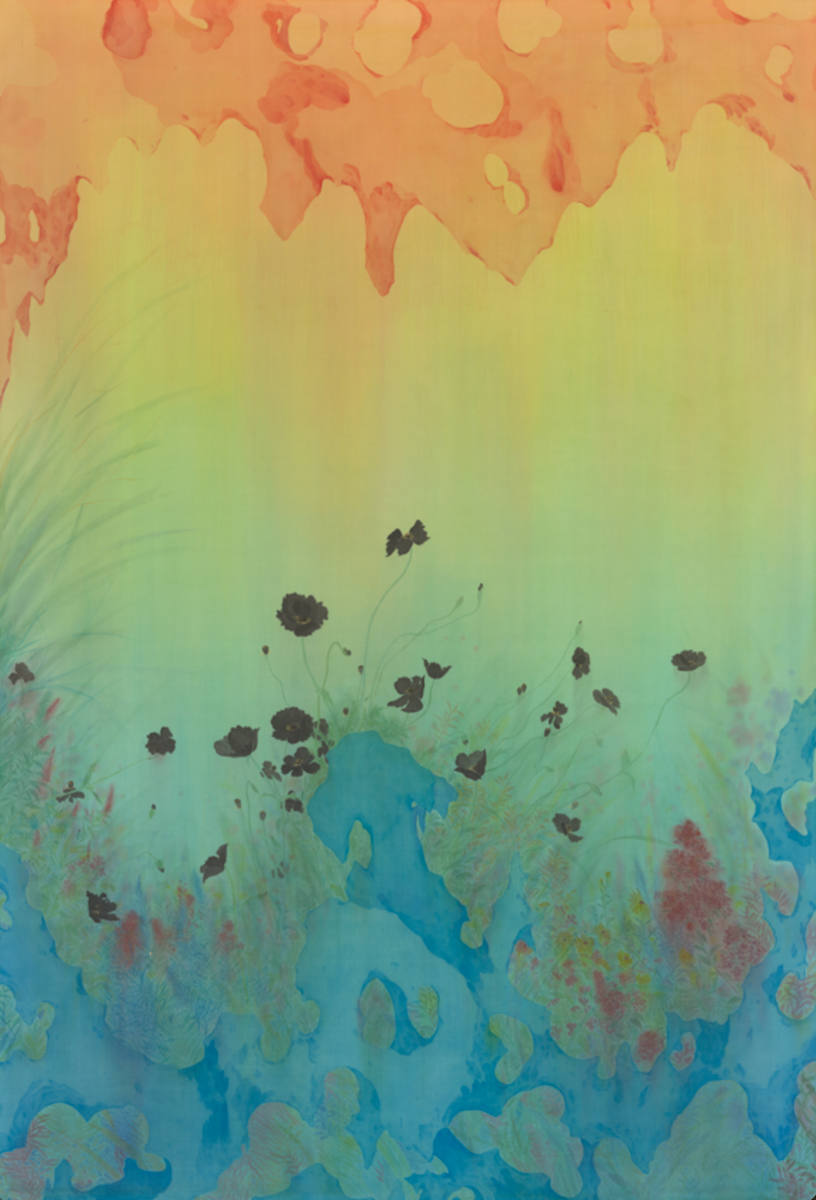
Sentiments among Flowers · Hong Meng
2025, Ink and colour on silk, 127 x 187 cm
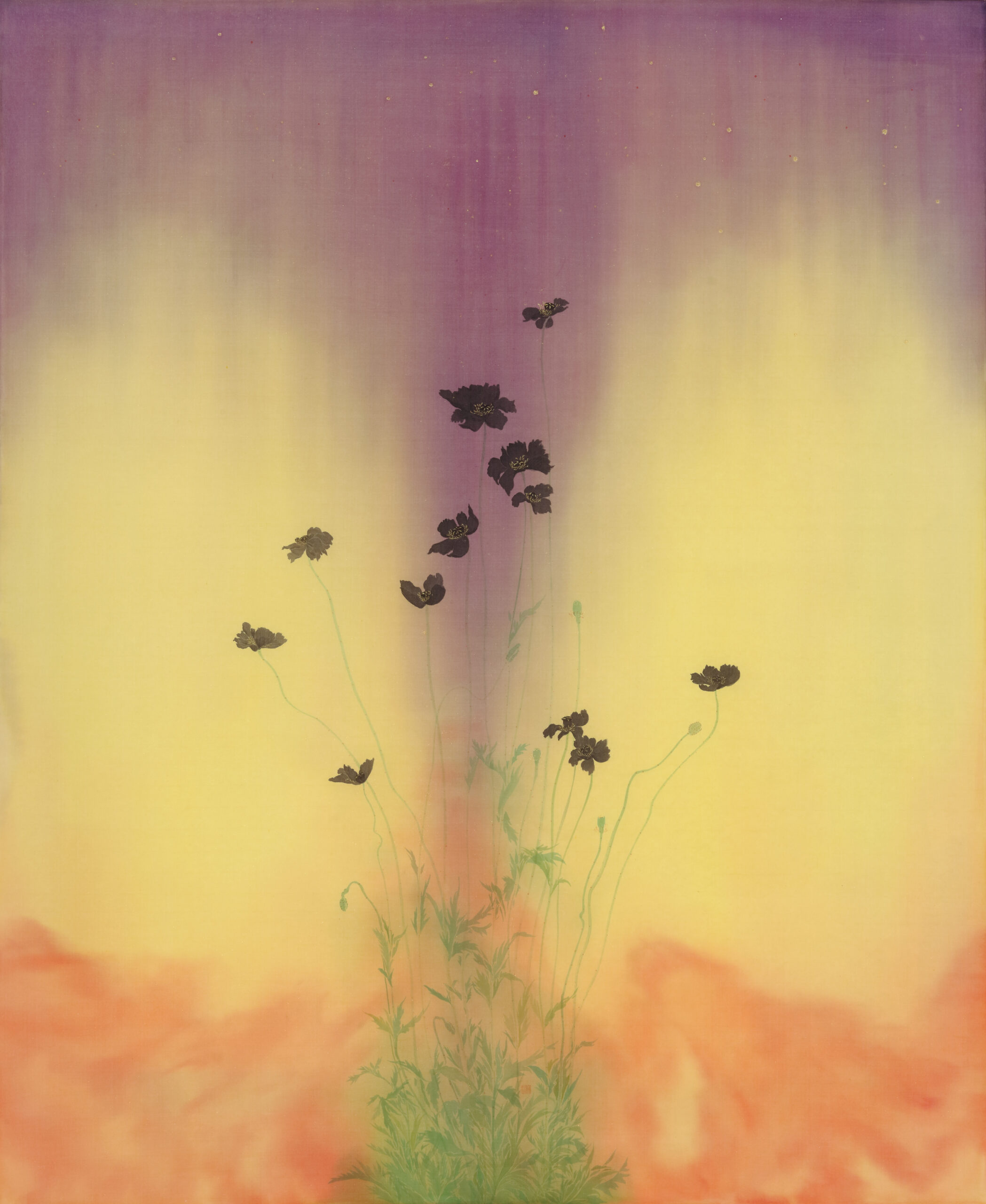
Sentiments among Flowers · Gathered Radiance
2025, Ink and colour on silk, 187 x 127 cm
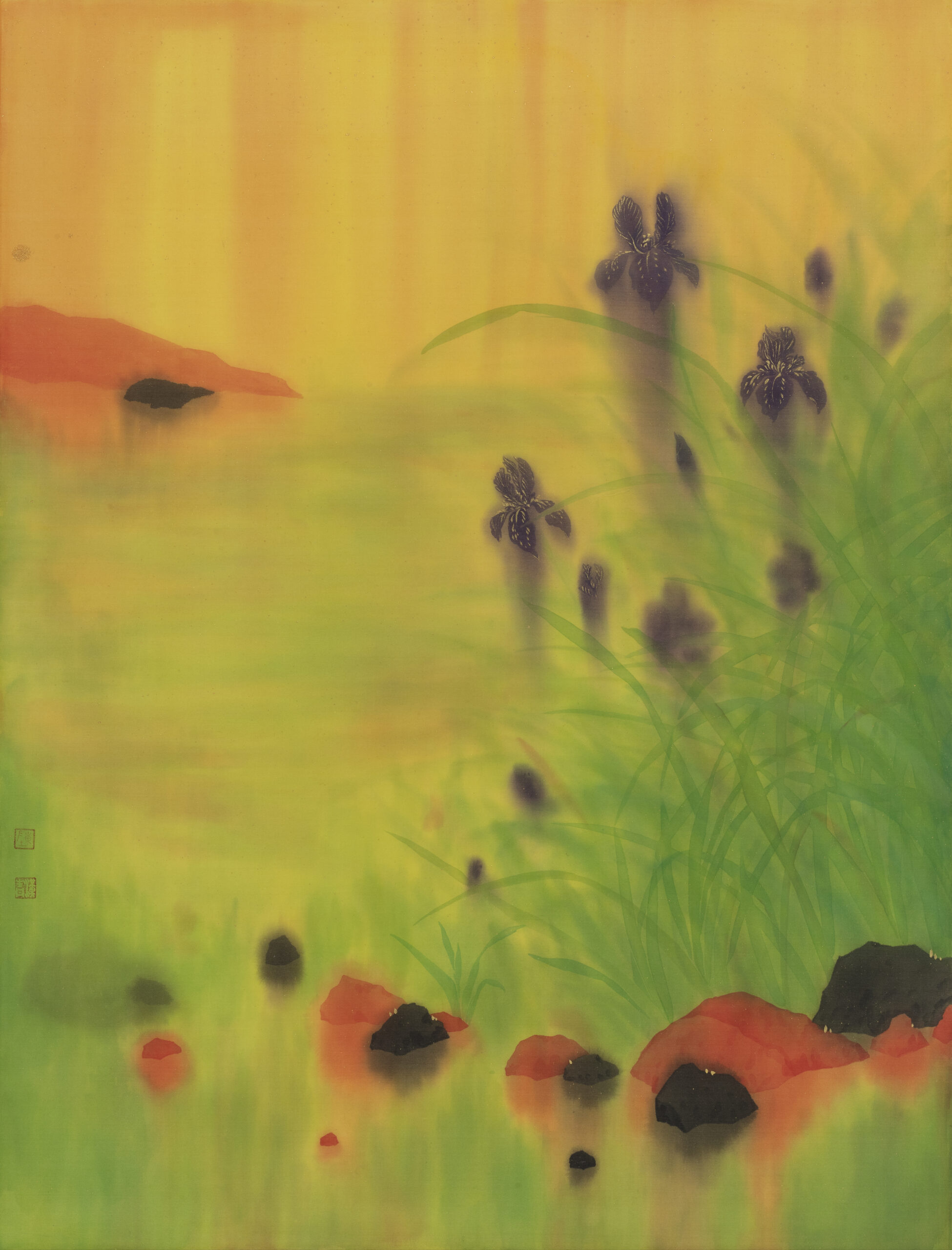
Sentiments among Flowers · Cen Fu
2026, Ink and colour on silk, 88 x 107 cm
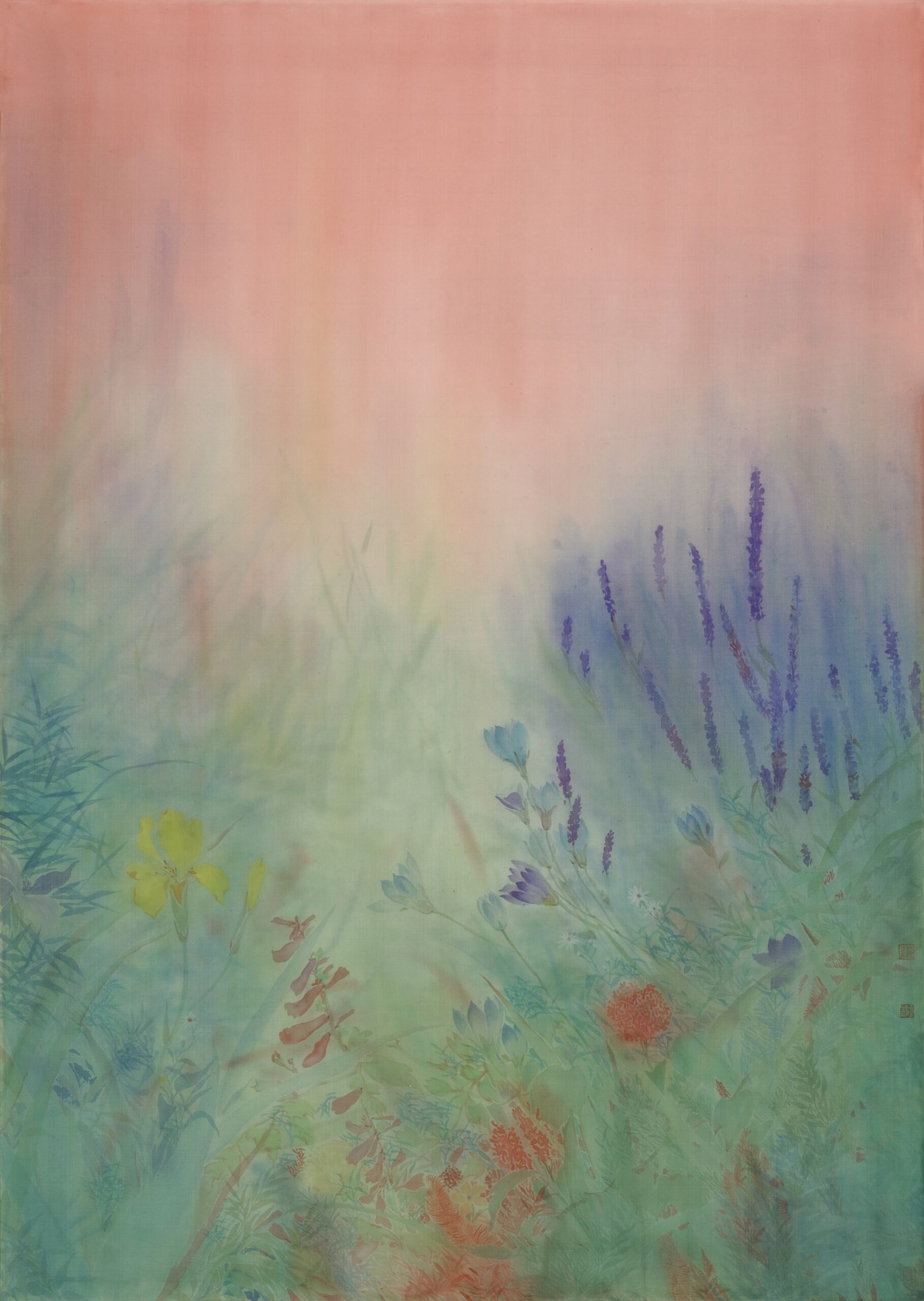
Sentiments among Flowers · Fleeting Glow
2026, Ink and colour on silk, 67 x 87 cm
Sentiments Among Flowers · Carefree Dream
2025, Ink and colour on silk, 67 x 97 cm
“Song of the Great Wind” Series

Song of Great Wind · Qing Pingyue
2026, Ink on paper, 34 x 136 cm

Song of Great Wind · Moon in the Misty Pond
2026, Ink on paper, 34 x 136 cm
The series draws upon the vast and vigorous spirit of the Han yuefu poem “Song of the Great Wind”, paying homage to the spare, lofty, and solitary ink spirit of Bada Shanren. It integrates the landscape texture-stroke methods of Shitao and Kuncan into the construction of bird-and-flower imagery, while translating the feathers and fur of animals through Yi Yuanji’s scattered-brush silk-hair technique, continuing the limpid and luminous tenor of Song-Yuan ink painting. The swift wind serves as the invisible thread running through each composition. The tortoise’s deep composure, the cat’s sharp alertness, the waterfowl’s unhurried ease — each creature’s demeanour and expression is fully realised, and within the interplay of motion and stillness the inner nature of all things is revealed. Vigorous brushwork captures the turbulent momentum of rocks, clouds, and water; nimble silk-hair strokes render the texture and emotional state of living creatures. Within a realm of austere vastness and boundless distance, the resilient strength of life between heaven and earth, and its free and authentic essence, are fully manifested — completing the contemporary translation of the traditional literati ink system.
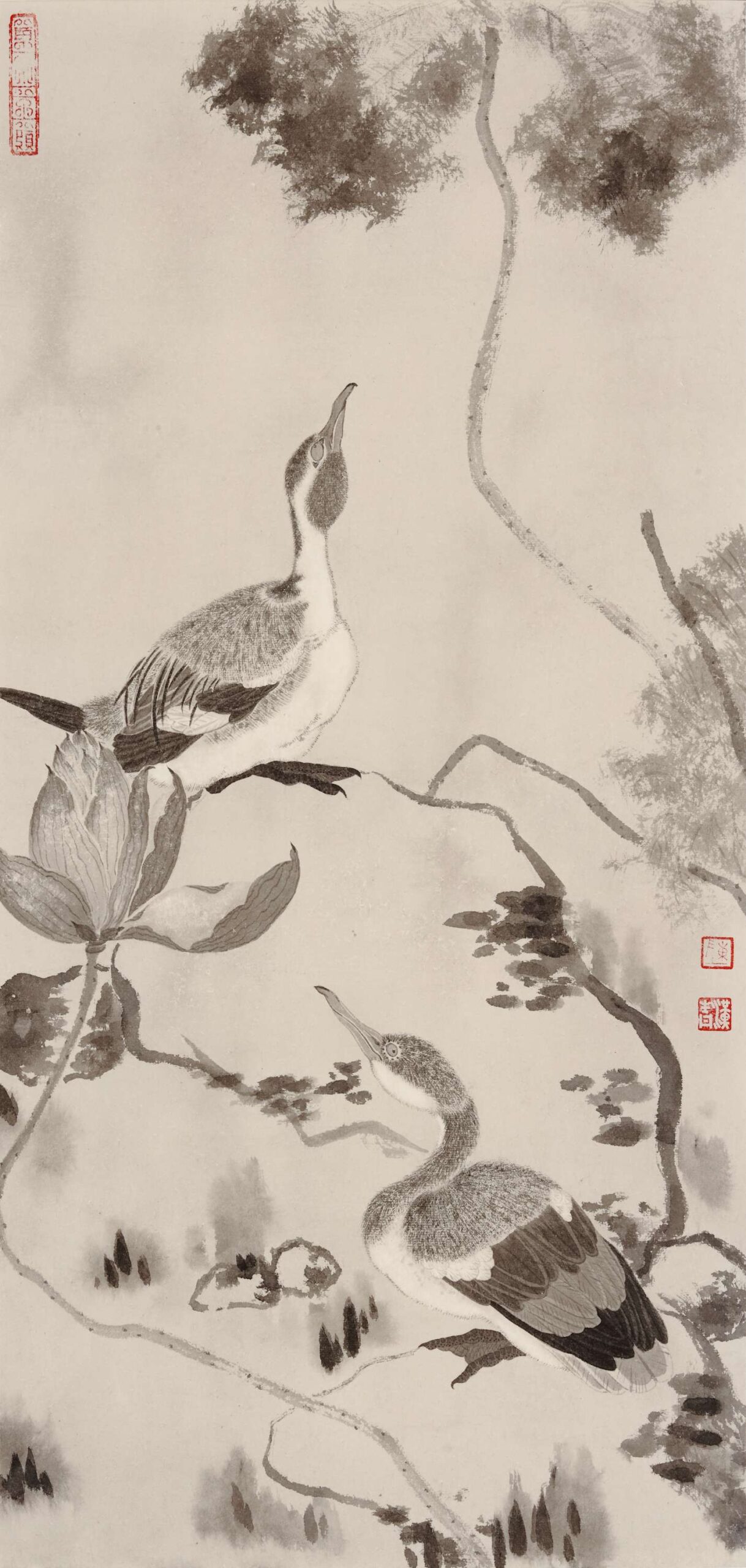
Song of Great Wind · Shang Pingxi
2026, Ink on paper, 68 x 34 cm
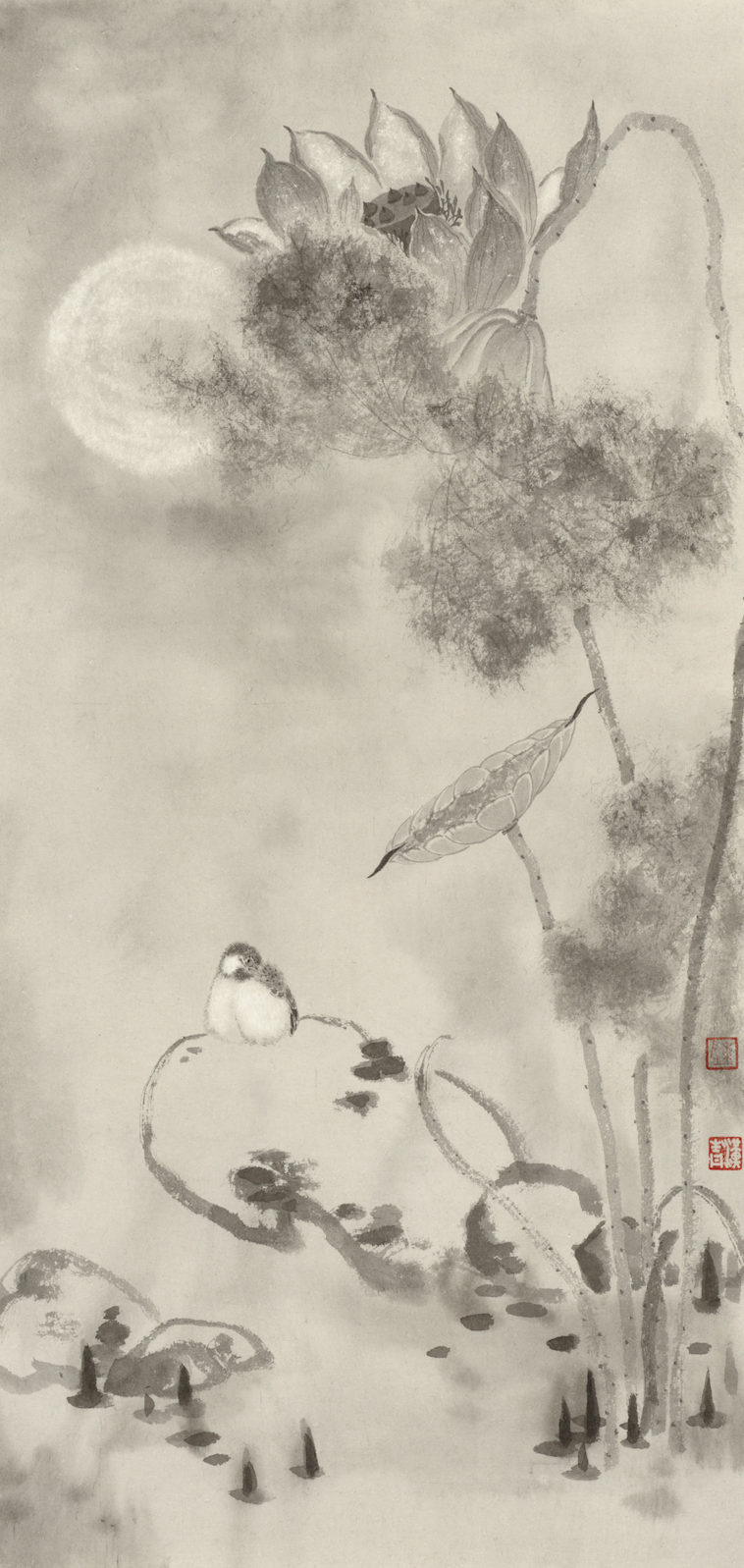
Song of Great Wind · Moonlit Bloom
2026, Ink on paper, 68 x 34 cm
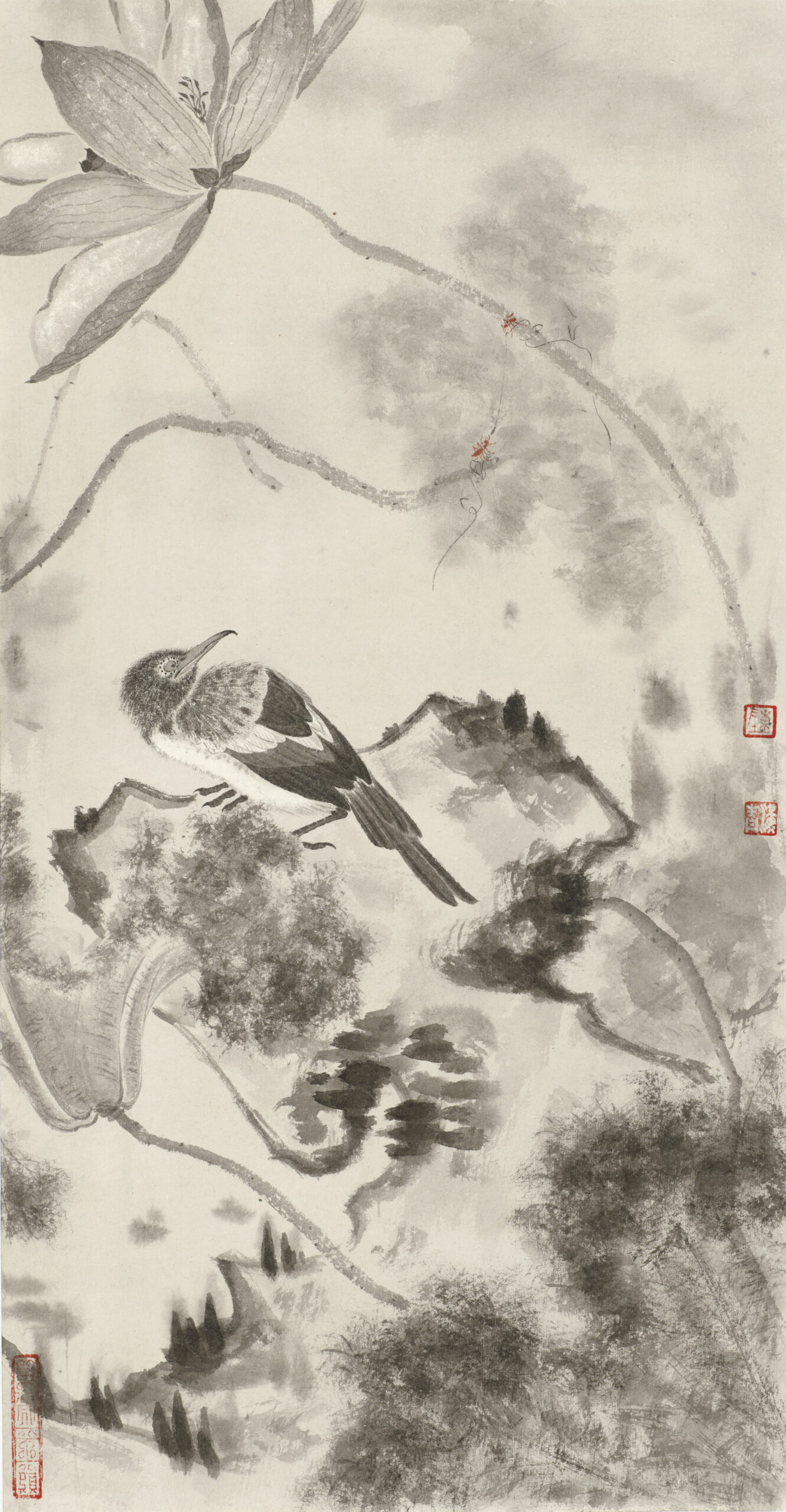
Song of Great Wind · Contemplating the Mote
2026, Ink on paper, 68 x 34 cm
“Hidden Mountain Collection” Series

The Hidden Mountain · To Dwell Within
2026, Ink and colour on silk, 87 x 67 cm

The Hidden Mountain · To Be Sung
2026, Ink and colour on silk, 87 x 67 cm

The Hidden Mountain · To Wander Through
2026, Ink and colour on silk, 87 x 67 cm

The Hidden Mountain · To Travel Through
2026, Ink and colour on silk, 67 x 87 cm
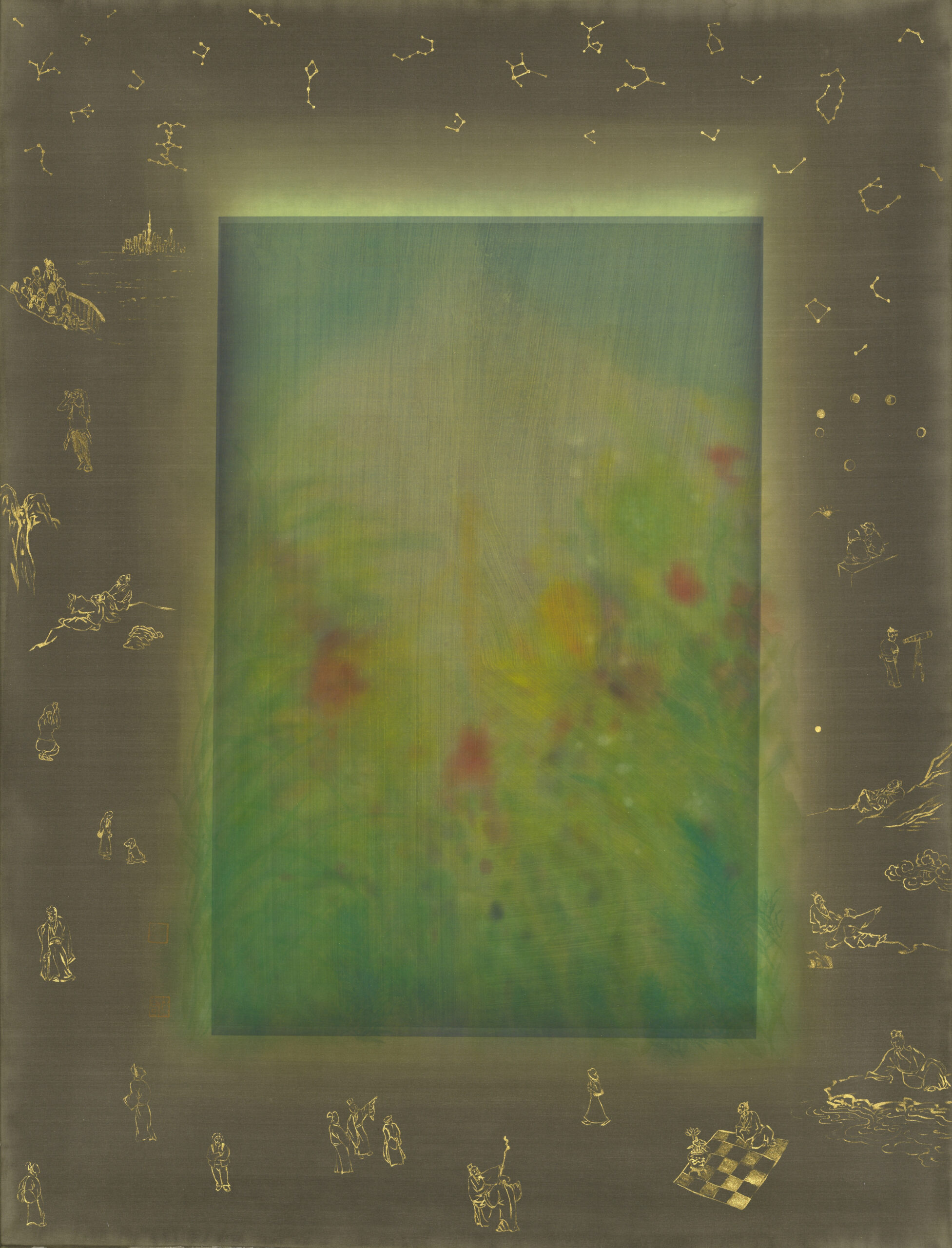
The Hidden Mountain · To-Gaze-Upon
2026, Ink and colour on silk, 87 x 67 cm
The series takes as its core framework the five qualities of an ideal landscape articulated by the Song dynasty painter Guo Xi in Lofty Ambitions in Forests and Springs — “To Travel Through”, “To Gaze Upon”, “To Dwell Within”, “To Wander Through” — the series further integrates “To Be Sung”, a realm of praise derived from The Analects. Together, these concepts are developed into five works, forming a creative system of “concealing the ancient within the contemporary”. The works place the traditional symbols of the Mustard Seed Garden Manual of Painting in structural counterpoint with contemporary urban scenery such as cross-sea bridges and skyscrapers, continuing the dialectical logic of “concealment and revelation”: the lower stratum conceals the cultural lineage of Song painting, reconstructed through colour; the upper stratum contemplates the living conditions of the contemporary metropolis, completing a translation from “observing landscape” to “observing the human world”. Among the works, Ke Ge (“To Be Sung”) employs gold and ink to write a trans-historical “ode to spring” in dual registers, forming a three-layered intertextuality across time and space, transforming the classical spirit of landscape painting into a spiritual dwelling for contemporary humanity.